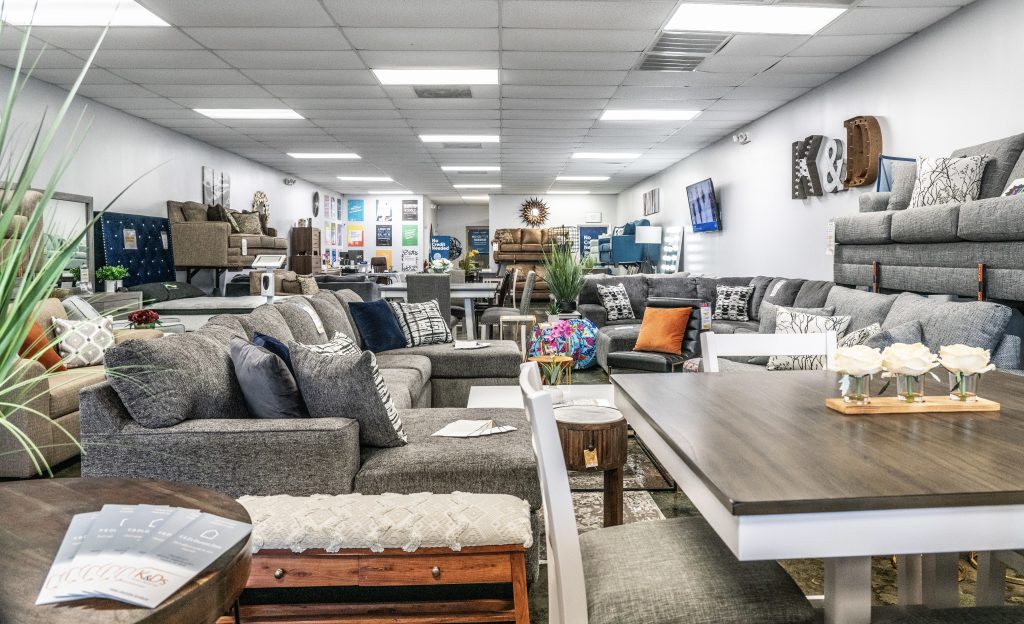
Understanding Furniture Materials, Construction & Quality
What’s inside your furniture matters more than most people realize. The quality of the fiber, foam, frame construction, and upholstery craftsmanship all play a major role in determining comfort, durability, support, and how long your furniture will last. While many furniture pieces may look similar on the surface, the materials and construction inside can create a significant difference in everyday comfort and long-term performance.
At K&D’s Furniture, we believe customers deserve to understand what they’re investing in. This furniture materials and construction guide was created to help homeowners compare cushion fibers, foam density, frame construction, and upholstery quality so they can make more confident furniture buying decisions. Whether you’re shopping for a sofa, sectional, loveseat, or custom furniture in Charlotte, understanding the materials inside your furniture can help you choose pieces built for lasting comfort and durability. Understanding furniture materials is an important part of making confident furniture buying decisions.
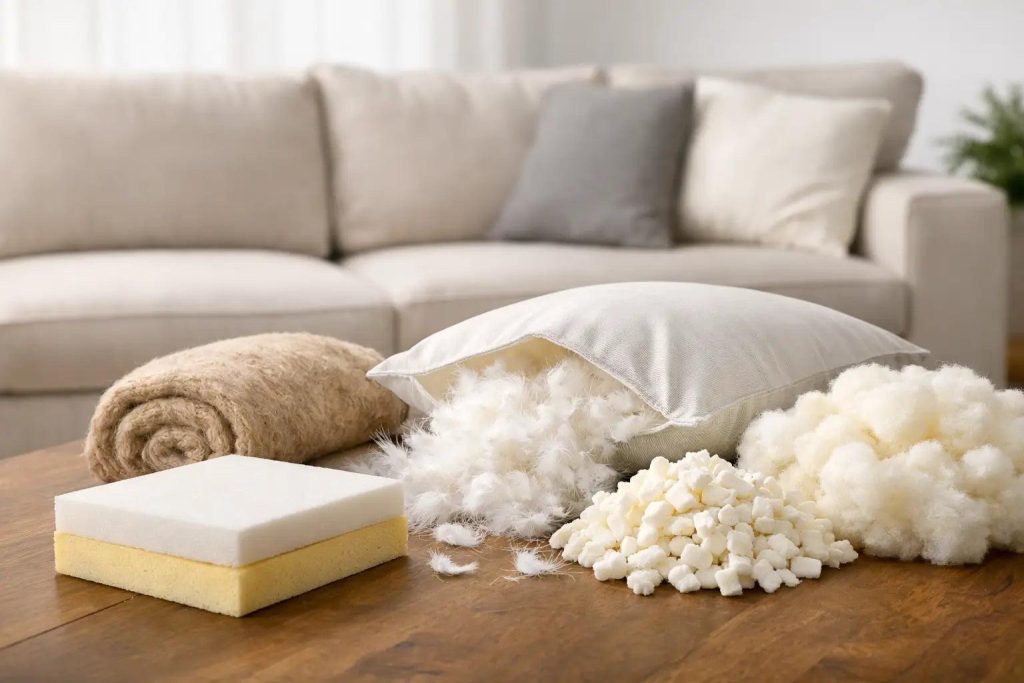

Why Cushion Fiber Matters
The fiber inside your seat and back cushions plays a major role in overall comfort, support, and long-term durability. Lower-quality recycled fibers may flatten quickly, feel rough or lumpy, and lose support much faster with everyday use. Higher-quality virgin fibers provide a fuller, softer feel with better shape retention and longer-lasting comfort.
For customers looking for a more luxurious seating experience, premium down-alternative fibers like Trillium offer cloud-like softness, excellent support, and long-term durability without the issues commonly associated with traditional feathers. Our Komfort & Design products use Trillium fiber to deliver a softer, more comfortable seating experience designed for everyday living and lasting performance. Different furniture materials and upholstery types may require different care and maintenance techniques.

Why Foam Density Matters
Not all foam cushions are created equal. Foam density, measured in pounds per cubic foot (PCF), plays a major role in determining comfort, support, durability, and how long your furniture will maintain its shape over time. Lower-density foams may feel soft at first but often break down more quickly, leading to sagging cushions and reduced support. Higher-density foams provide better structure, improved comfort, stronger shape retention, and longer-lasting performance for everyday use.
At K&D’s Furniture, we focus on offering better-quality materials that provide lasting comfort and durability. Higher-density foam options, such as 1.8 and 2.5 density cushions, are designed to better resist flattening and maintain their support through years of use. Investing in higher-quality foam can make a significant difference in both comfort and the overall lifespan of your furniture. Buyers comparing sofas and sectionals should also consider foam density, frame construction, and upholstery quality.

Why Furniture Frame Construction Matters
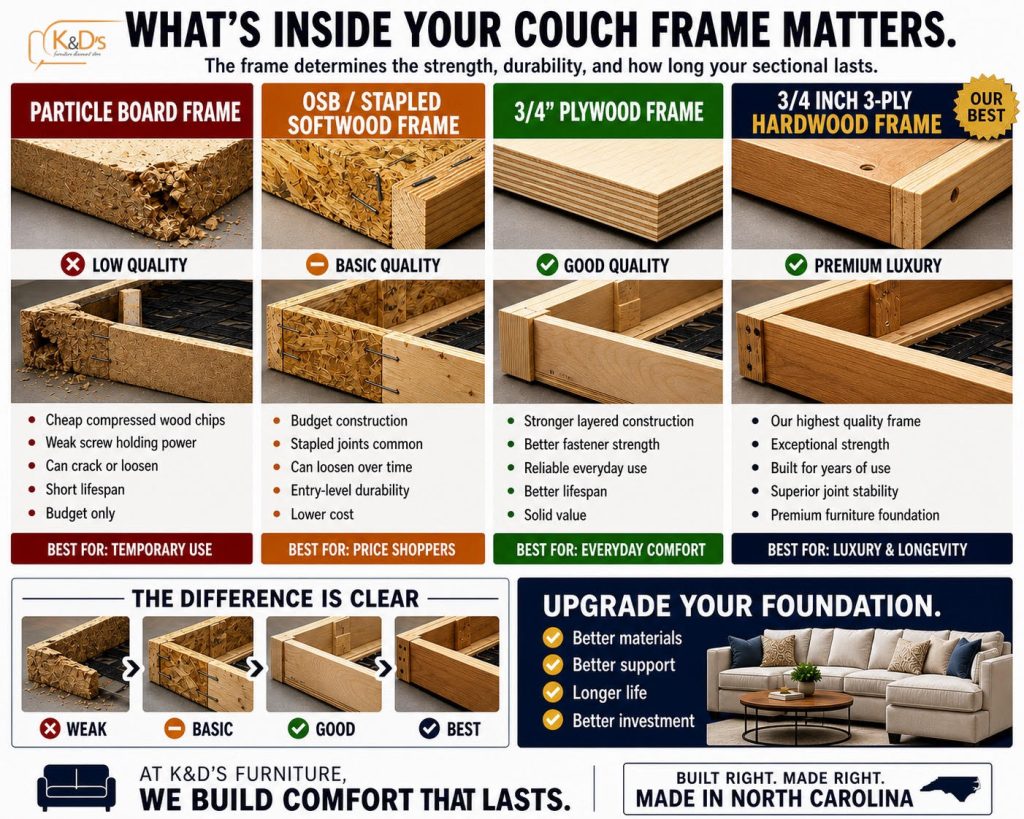
The frame is the foundation of your furniture and plays a major role in determining overall strength, durability, stability, and long-term performance. Lower-quality frames made from particle board or stapled softwood construction may loosen, crack, or weaken over time—especially with everyday use. Higher-quality frame materials, such as layered plywood and kiln-dried hardwood, provide stronger joint stability, better support, and a longer furniture lifespan.
At K&D’s Furniture, we believe quality construction matters. Stronger frames help furniture maintain its shape, improve comfort and support, and hold up better through years of regular use. Investing in better frame construction can make a significant difference in both durability and overall value, especially for high-use pieces like sofas and sectionals. Understanding furniture construction can help homeowners maintain furniture more effectively over time.
Why Upholstery Craftsmanship Matters
The quality of upholstery craftsmanship plays a major role in how furniture looks, feels, and holds up over time. Skilled upholstery work creates tighter seams, cleaner lines, better fabric tension, and a more tailored appearance overall. Lower-quality upholstery may show loose fabric, uneven seams, wrinkles, or poor fitment that can become more noticeable with everyday use.
Experienced upholsterers focus on precision, consistency, and long-term durability to create furniture that not only feels comfortable but also maintains its appearance over time. At K&D’s Furniture, we believe craftsmanship matters because attention to detail can make a significant difference in both the comfort and overall presentation of your furniture. Our Furniture Design & Layout Guide includes tips for combining furniture styles, textures, and materials

See the Difference in Person
Visit our Charlotte showroom to compare furniture materials, comfort levels, construction quality, and craftsmanship in person. Understanding what’s inside your furniture can help you make a more confident long-term investment.